Soccer punts live or die on one uncomfortable truth: a third of all outcomes is a draw, and a draw kills almost every straightforward bet. Double chance exists to soften that blow. Instead of backing a single result, you cover two of the three possible outcomes with one stake, accepting lower odds in exchange for a much higher chance of the ticket surviving. It is one of the oldest and most reliable tools in soccer betting, and once you understand how the three versions work, you will spot situations where they are genuinely the smart play rather than the timid one.
What the double chance market actually covers
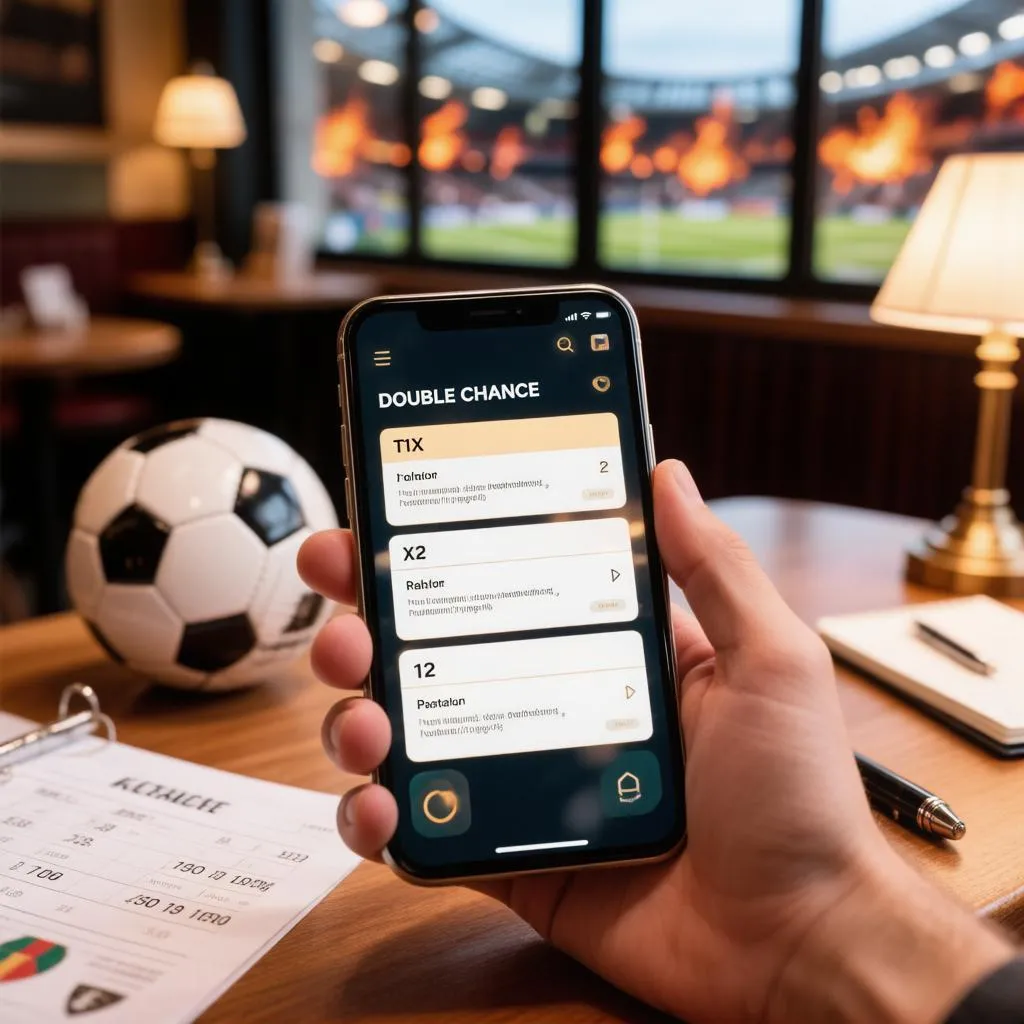
In a standard match result bet, you choose between three outcomes: home win, draw or away win. Double chance merges two of those three into one selection, so your bet wins if either covered result happens. There are exactly three versions, and the notation tells you instantly what is covered:
- 1X — the home team wins or the match ends in a draw; you lose only if the away team wins.
- X2 — the match ends in a draw or the away team wins; you lose only if the home team wins.
- 12 — either team wins the match; you lose only if the game finishes level.
Notice what each version is really insuring against. 1X protects a favorite who is expected to win but might be held to a draw. X2 does the same for the underdog or for an away side that draws often. 12, sometimes labeled “draw no bet with insurance,” is the pick when you expect a decisive match but want a safety net against a stalemate. Reading the notation this way turns an abstract market into a plain question: which single outcome am I willing to lose to?
How the odds are built
Because two outcomes count as a win, the bookmaker prices double chance at shorter odds than any of the individual results. The math is not a secret. If a match has a home win priced at 2.10, a draw at 3.40 and an away win at 3.60, the implied probabilities are roughly 47.6%, 29.4% and 27.8% respectively. The 1X price covers home win plus draw, so its fair odds sit around the inverse of 77% probability, roughly 1.30. The sportsbook then trims that a little to build in margin, which is why the quoted price might be closer to 1.27.
Three consequences follow from this math, and they shape when the market is worth touching:
- The stronger the favorite, the less value the 1X version carries, because the draw becomes the only real risk and the odds collapse toward the moneyline price.
- The closer the teams, the more attractive X2 becomes, since an underdog who draws frequently gives you two realistic escape routes.
- The 12 version always carries the shortest odds of the three, because two outright wins cover the majority of realistic outcomes in lopsided fixtures.
None of this makes double chance a magic formula. It simply repositions risk. You are trading payout size for hit rate, and the skill lies in recognizing matches where the draw probability is high enough that single result bets are overpaying for risk you never needed to take.
Double chance versus similar safety markets
Double chance is not the only market designed to soften the blow of a draw, and bettors often confuse it with its closest cousins. The differences matter more than they first appear, especially when it comes to what happens to your stake in each scenario.
| Market | Outcomes covered | Stake when the match is drawn |
|---|---|---|
| Double chance 1X | Home win or draw | Pays out as a winning bet |
| Draw no bet (home) | Home win only | Stake refunded, no profit, no loss |
| Asian handicap 0 | Home win by any margin | Stake refunded at level handicap |
| Standard 1X2 (home) | Home win only | Lost if the match ends level |
The table makes the trade-off explicit. Draw no bet refunds your money in the draw scenario, which sounds safer, but it offers worse odds than the corresponding 1X price because you are buying the refund. Double chance keeps the draw as a full win and pays for that extra safety with lower returns. If you genuinely expect a favorite to win but fear a grind-it-out draw, 1X pays more and costs the same risk tolerance. If you merely want protection without a strong opinion, the refund markets fit better. Neither is wrong — they answer different questions.
Situations where double chance earns its place
Used carelessly, the market becomes a crutch for bettors who want low odds and call it strategy. Used deliberately, it solves specific problems that single result bets cannot. These are the scenarios where experienced punters reach for it:
- Backing a strong away side in a hostile stadium, where a draw is a perfectly respectable result for the visitors and X2 captures that reality.
- Cup ties and second legs, where a team only needs a draw to progress and will happily park the bus.
- Early season matches or derby fixtures, where form is uncertain, tempers run high and stalemates are statistically more common.
- Accumulator building, where one leg covering two outcomes instead of one dramatically reduces the chance of the whole slip dying.
- Weather and pitch concerns, when heavy rain or a poor surface makes fluent, decisive soccer unlikely.
The common thread is that in every case the draw is a live, foreseeable outcome, not an afterthought. That is the entire discipline of the market: you are not avoiding risk, you are choosing the specific risk you refuse to accept. A bettor who picks 1X in a fixture where both teams average over three goals per game has not understood the tool; a bettor who picks X2 for a relegation-threatened away side that has drawn five of its last eight has.
Where the market falls short
Honesty about the drawbacks is what separates useful guidance from cheerleading, and double chance has real limitations that show up over a long season:
- The odds are compressed, so winning tickets often return less than the risk would justify, and long term profit margins shrink accordingly.
- Covering two outcomes does not halve the risk, because the two covered outcomes are rarely equally likely — a 1X bet is usually riding far more on the home win than on the draw.
- The market invites lazy analysis, since “cover two outcomes and hope” feels like diligence when it is actually just lower variance.
The last point deserves emphasis. Because two outcomes win, tickets hit often enough to feel successful, and frequent small wins can mask a slow bleed of margins. Serious users track their results over dozens of bets rather than judging the market on a weekend’s feel. If your hit rate is high but your bankroll is flat or shrinking, the market is doing exactly what the odds predicted — and the fault lies in selection, not in the tool.
Putting it to work sensibly
The strongest way to use double chance is as a precision instrument attached to a genuine opinion, not as a blanket default. Before placing the bet, ask yourself three questions. First, how likely is the draw in this specific fixture, based on team styles, motivation and recent form? Second, does the quoted price compensate me fairly for the outcome I am still exposed to? Third, would a refund market or a straight result bet answer my opinion better and pay more? If the answers line up, the selection is justified; if not, the market is simply a comfortable hiding place.
Handled that way, double chance becomes what it was designed to be: a way to bet on matches where one outcome is unacceptable but a second one is perfectly live. It rewards bettors who read games rather than odds boards, and it punishes anyone who treats two covered results as twice the safety for half the thought.