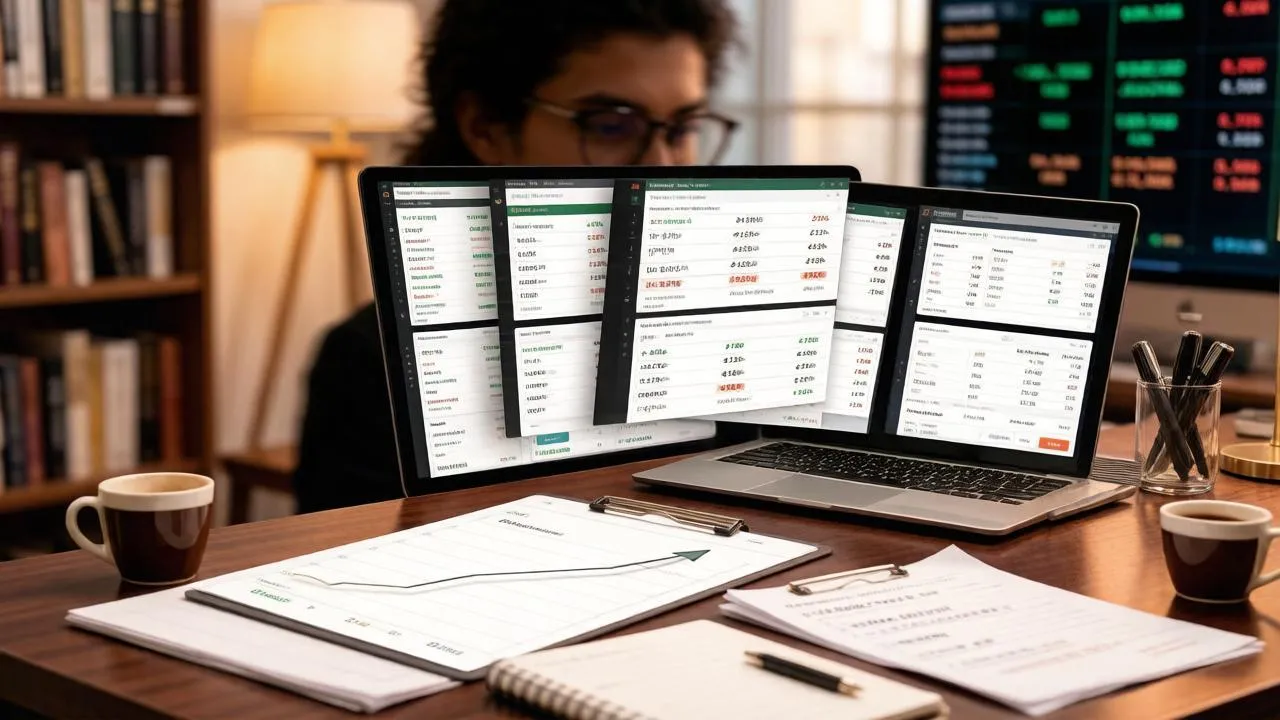
Most bettors obsess over picks. They spend hours studying form, injuries, weather and matchups, then lose a meaningful slice of their edge in about ten seconds at the moment they place the bet — simply because they took the first price they saw. Line shopping, the habit of comparing the same bet across several bookmakers before staking, is the closest thing sports betting has to a free lunch. You do not need better picks, more capital or inside knowledge. You just need to stop accepting the worst available number.
The math behind this is unglamorous but unforgiving. Over hundreds and thousands of bets, the difference between 2.05 and 2.10 on the same side compounds quietly into two or three percentage points of return on investment — which, in an activity where most participants finish negative, is often the entire gap between a winning bettor and a losing one.
What line shopping actually means
At its core, line shopping is the practice of checking the same market — the same game, the same bet type, the same bet amount — across multiple sportsbooks before committing money. The idea rests on a simple fact: bookmakers do not share one universal price. Each one builds its own odds, balancing its own book, reacting to its own customer flows and moving at its own speed when news breaks.
That means the “true” price of an event does not exist in a single place. At any given minute, one book might have a team at -110 while another offers -105, or one decimal price of 2.08 next to a competitor’s 2.15. The bettor who checks five or six books captures these gaps systematically. The bettor who does not donates them to whichever sportsbook happened to be open on their phone.
A useful mental model: every bet you place has a hidden surcharge baked into the price. Bookmakers charge this surcharge — often called the vig, juice or margin — to guarantee themselves a profit. Different books charge different amounts on different markets at different moments. Line shopping is simply refusing to overpay.
The arithmetic behind the 2-3% figure
The claim that line shopping adds a meaningful few percent to long-term ROI sounds modest until you run the numbers, because small per-bet differences behave like interest on a very large principal when aggregated over a season.
Consider a simple example. Suppose you bet $100 per wager at odds of 2.00 (American -110 for a standard spread, after rounding) and win 52% of a thousand bets. Your profit equals $2,000 of wins minus $960 of losses — call it roughly 4% ROI. Now suppose that by shopping across five books you consistently find the same side at 2.04 instead of 2.00. Those four cents per dollar staked apply to every winning and losing outcome alike, and they lift your ROI by approximately two full percentage points without changing a single pick.
In percentage terms the improvement is even easier to see at higher prices. At odds of 2.50, a mere 0.05 improvement in price is a 2% difference in payout. At 4.00, it approaches 1.3% — and again, it applies to every bet, win or lose, purely for the act of choosing the better number.
This is why professional bettors treat closing line value as the primary scoreboard. If the price you took regularly beats the market’s final price, you are likely to be profitable over time — and the cheapest, most reliable way to beat the closing line consistently is to start from the best available opening number rather than an average one.
| Odds taken vs best available | Extra payout per $100 win | Effect on ROI over 1,000 bets |
|---|---|---|
| 2.00 instead of 2.04 | $4 | about -2.0% |
| 2.10 instead of 2.16 | $6 | about -2.9% |
| 2.50 instead of 2.58 | $8 | about -3.2% |
| 1.91 instead of 1.95 | $4 | about -2.1% |
Reading the table, one thing should stand out: the gap never goes away, regardless of the price level. Whether you bet favourites or longshots, failing to shop the line costs roughly the same two to three percent on your turnover. That cost is not hypothetical — it is money that was offered by at least one bookmaker and left on the table.
Why odds differ from book to book
If all sportsbooks had identical opinions and identical customer bases, prices would converge and shopping would be pointless. In practice, several forces keep them apart.
- Independent risk management. Each book sets limits and shades lines based on its own exposure. A book that is heavy on one side moves its price more aggressively, creating divergence across the market.
- Different customer bases. Recreational money flows unevenly. Books popular with casual public bettors shade prices toward popular teams, while sharper books price closer to the true line.
- Reaction speed to news. Injury reports, lineup announcements and weather updates move markets in seconds. Some books reprice instantly; others lag by minutes, occasionally leaving stale numbers exploitable.
- Promotional pricing and boosts. Enhanced odds and reduced-juice specials deliberately break from the market, and these offers are exactly what a shopper is looking for.
- Outright errors. Rare but real: software glitches, miskeyed lines and mistaken feeds occasionally produce prices far from the market, and fast shoppers are usually the ones who catch them.
These five forces together mean that, on any normal betting day, the spread between the best and worst price on the same side routinely reaches one to three percent of the payout — and on busy weekends with hundreds of simultaneous games, it can be wider.
How many bookmakers are enough
The practical question is not whether to shop but how much shopping infrastructure to maintain, since each additional account carries a small cost in deposits, verification and attention. The consensus among experienced bettors is that the first few accounts deliver almost all of the benefit.
- Open accounts at five to six books. The first two or three capture the biggest price gaps; accounts four through six keep adding small improvements and, importantly, serve as backup when one book restricts your limits.
- Check every line before staking. Build the habit into the betting routine itself: never click “place bet” on a price you have not compared. Even fifteen seconds per bet is enough.
- Track the best price, not just your result. Keep a record of the odds you took versus the best available. This “shopping discipline” metric makes the value visible and motivates consistency.
- Use odds comparison tools. Automated screeners and odds feeds let one glance cover a dozen books, turning what used to be manual work into a two-second check.
- Re-shop late moves. Prices move until kickoff. If a line drifts in your favour after you bet, some books allow a partial hedge at the improved number, effectively locking in extra value.
- Mind settlement rules and limits. A marginally better price at a book with slow payouts, odd void rules or tiny limits is not better. Compare the whole package, not just the number.
Following this routine turns line shopping from an occasional gesture into a system. The bettors who fail at it usually fail at step two: they shop when it is convenient and accept the first price when they are eager to get money down — which is precisely when discipline matters most.
What line shopping cannot fix
Honesty requires the caveat that shopping the line is an amplifier, not a miracle. It raises the return on the edges you already have, and it cannot create profit from picks that have no edge. A bettor who consistently takes bad numbers on bad bets loses slightly more slowly than one who takes bad numbers on good bets wins consistently.
There are also practical frictions. Managing balances across several books means spreading capital thinner. Some books limit or ban consistently sharp customers, which is why backups matter. And comparing prices takes time, at least until it becomes automated. None of these frictions outweigh the benefit for a serious bettor, but they explain why the habit is more often preached than practised.
It is also worth noting where the gains concentrate. Line shopping helps most on high-volume, liquid markets where many books compete — major league spreads and totals — and helps least on obscure markets where two or three books quote similar, heavily padded prices. It also pairs naturally with reduced-juice books: shopping across a set that includes low-margin operators raises the floor of every comparison.
Making the habit stick
The bettors who actually capture the 2-3% are the ones who removed friction from the process rather than relying on willpower. Automate what can be automated: keep comparison tools bookmarked, keep all accounts funded, and decide your stake before you look at prices so that a disappointing number never talks you into skipping the comparison.
Above all, treat price selection as part of the bet itself, not an afterthought. A pick is not complete until it has a price attached — and among the prices available at that moment, the best one is the only one worth taking. That single discipline, repeated across a thousand wagers, is what separates bettors who grind out a few percent of edge from those who hand it back to the bookmaker without ever noticing it was there.